Squishies
The Little Idea That Became a Big Trend
Meet Athena, the 10-year-old co-author of Squishies.
Athena loves squishies and all things creative. One day, she decided to imagine how squishies might have been invented, and Paul’s story was born. What begins with a balloon and some air-dry clay becomes a story about friendship, creativity, trends, and staying true to why something was created in the first place.
In a busy city lived a 12-year-old boy named Paul. Paul had ADHD, which sometimes made it difficult for him to concentrate in class, especially when he wasn’t interested in the lesson. He was creative and curious, but he often felt different from the other kids at school. Even though he came from a wealthy and supportive family, he didn’t have many friends and often felt lonely.
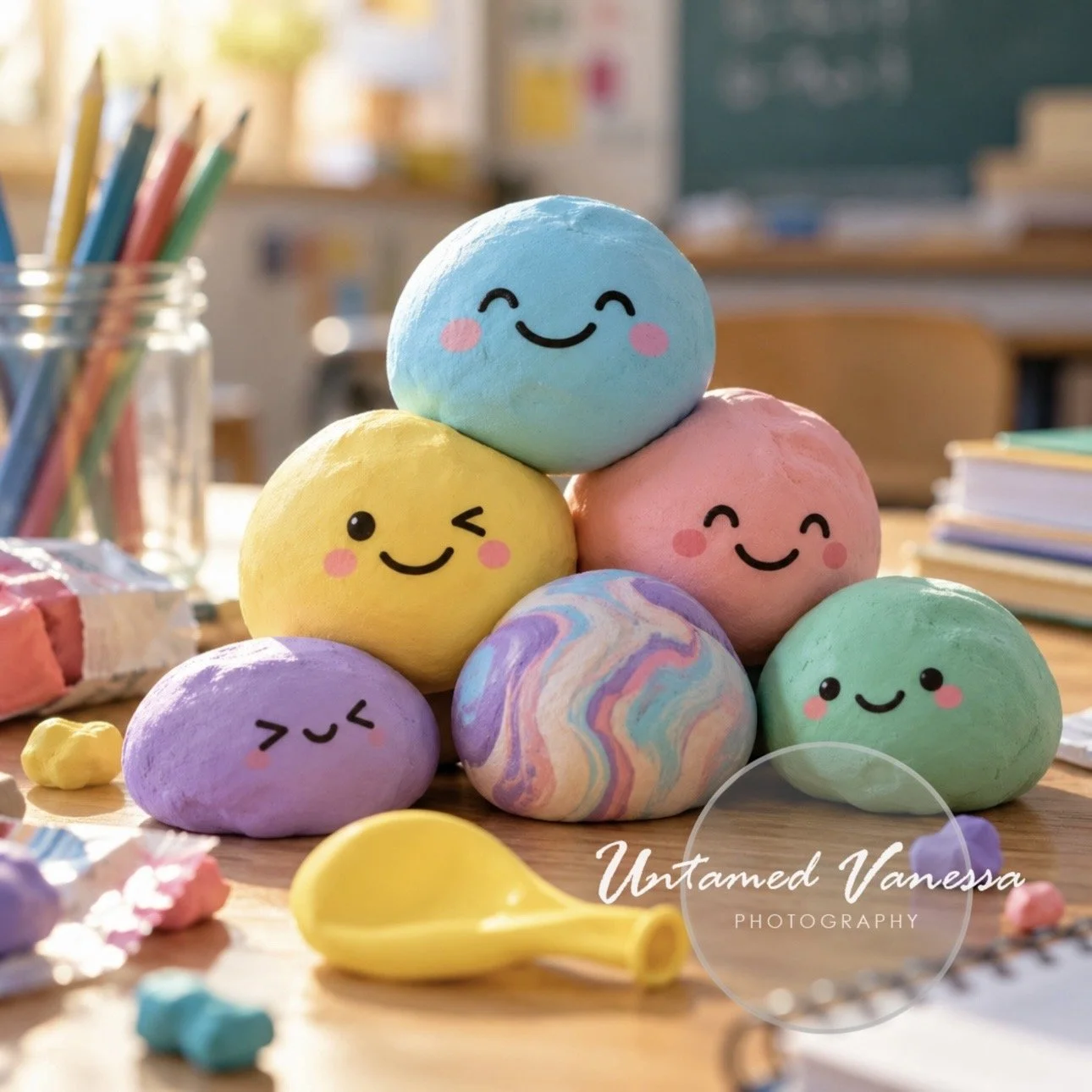
One afternoon, during a particularly boring math class, Paul noticed a deflated balloon and some air-dry clay among his things. With nothing better to do, he stuffed the clay inside the balloon. He wasn’t trying to invent anything. He simply began poking, squeezing, and shaping it under his desk. To his surprise, he found the feeling calming and satisfying.
Soon, the student sitting next to him noticed. “What’s that?” he asked.
Paul shrugged. “I don’t know. I just made it.”
The other student wanted to try it. Then another student came over, and another. Before long, kids who had barely spoken to Paul before were gathering around his desk, asking if he could make one for them too. They began calling his strange little invention a “squishy.”
For the first time, Paul had something that helped him connect with other people. He began making squishies after school, experimenting with different shapes, textures, and designs. Some were soft, some were firm, and some had funny faces. His parents noticed that Paul seemed happier and more confident, so they helped him turn his idea into a small company called Squishies.
The toys quickly became popular. At first, many of the people buying them were children like Paul who liked having something in their hands when they felt restless, nervous, or unable to concentrate. But soon, squishies became fashionable. Influencers showed them online, collectors wanted rare designs, and resellers began buying as many as they could.
Suddenly, a simple toy that had helped Paul feel calm and make friends became difficult to find and very expensive. Other companies began producing cheap imitations that broke easily. Paul was amazed by how quickly something he had made out of boredom had turned into something people were fighting to buy.
But trends never last forever.
Eventually, influencers moved on to the next popular toy. Collectors stopped chasing squishies, resellers could no longer sell them for huge prices, and many of the companies making cheap copies disappeared. Prices returned to normal, and the children who genuinely enjoyed squishies could easily buy them again.
Paul’s company survived because he had never forgotten why he made his first squishy. He continued creating toys that were fun to squeeze, comforting to hold, and affordable for the children who loved them.
Years later, Paul would sometimes think about that boring math class and the deflated balloon on his desk. He had never planned to start a company or create a worldwide trend. He had simply made something that helped him—and by sharing it, he discovered that something small could help other people too.